
Why does 1978 matter for a remodel?
1978 is the year the federal government banned lead-based paint for use in homes, so a house built before then may still have it under later coats. The US Environmental Protection Agency (EPA) estimates that most of those houses still do.
Intact paint is not the main problem. Lead becomes a hazard when work turns it into dust and chips: sanding, scraping, cutting into plaster, pulling out old windows and trim. That is what a remodel does, which is why the federal rules attach to the work rather than to the house.
In 1978, the federal government banned the sale of lead-based paint for use in homes, childcare facilities and preschools.
Approximately three-quarters of the homes in the United States built before 1978 still contain some lead-based paint.
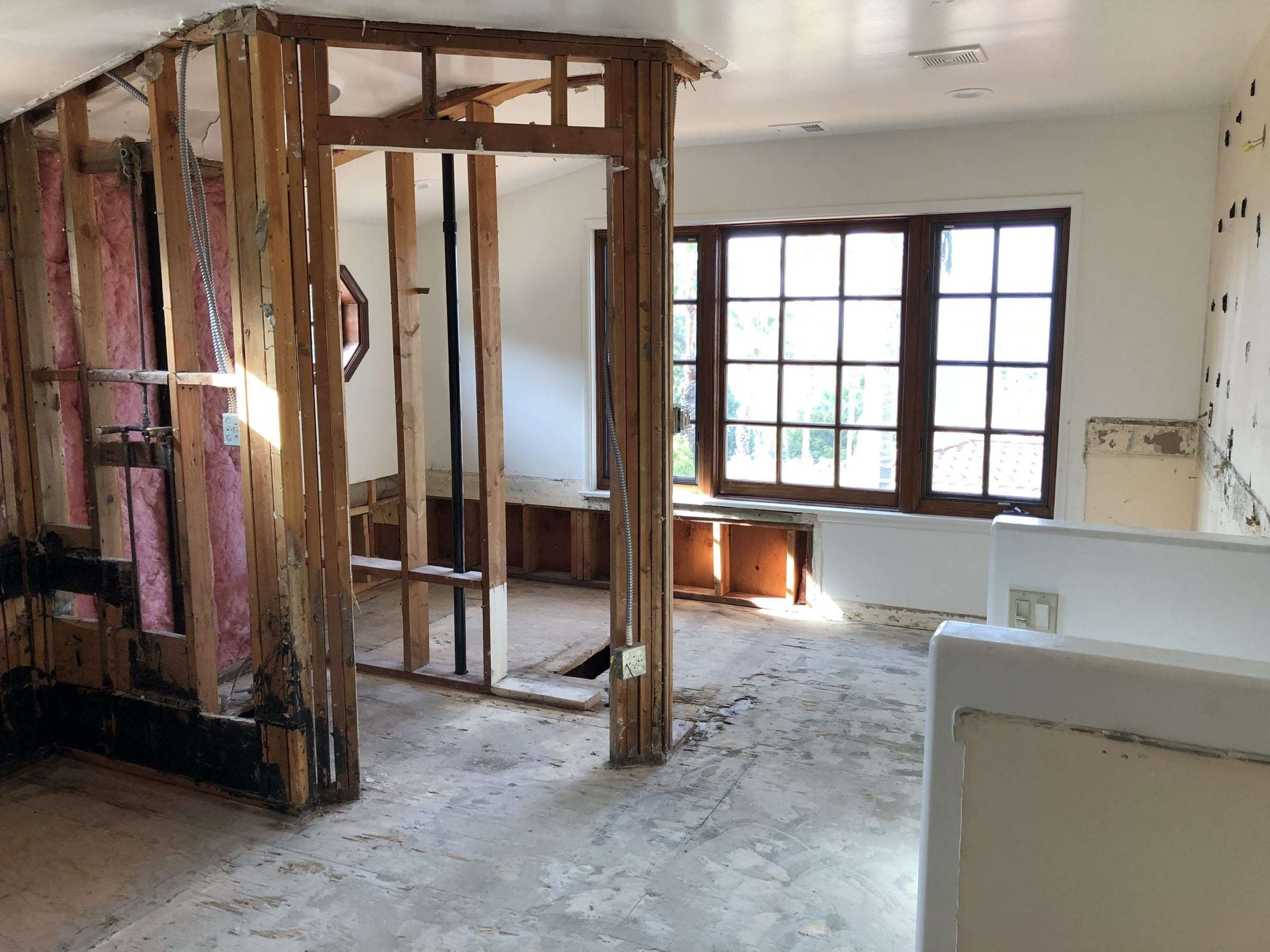
Any renovation, repair or painting project in a pre-1978 home or building that has lead-based paint can easily create dangerous lead dust.
What does the RRP rule require of a contractor?
The Renovation, Repair and Painting (RRP) Rule works on two levels. The firm itself must be certified by EPA, and the people doing the work must be trained, either as certified renovators or on the job by a certified renovator. Size is no excuse: EPA says the rule covers every firm, sole proprietors included, and names general contractors and the specialty trades among them.
A firm without that certification may neither do covered work in a pre-1978 home nor advertise it. The rule also carries a pre-renovation education requirement, so before work starts you should be handed EPA's pamphlet for owners and tenants, Renovate Right.
EPA's RRP Rule requires that anyone paid to perform work that disturbs painted surfaces in homes, childcare facilities and preschools built before 1978 be certified and their employees be trained (either as a certified renovator or on-the-job by a certified renovator) in the use of lead-safe work practices that minimize occupants’ exposure to lead hazards.
This includes all firms, even sole proprietorships.
Firms cannot advertise or perform renovation activities covered by the RRP Rule in homes or child-occupied facilities built before 1978 without firm certification.
pamphlet includes general information about legal requirements for lead-safe work practices for homeowners, tenants, childcare providers and parents during renovation activities.
Which remodeling work does the rule cover?
Almost anything that disturbs paint in a pre-1978 house. EPA's page for contractors lists these among the covered activities:
- Remodeling, and repair or maintenance
- Electrical work
- Plumbing
- Painting preparation
- Carpentry
- Window replacement
Is a small job too small for the rule?
Only a very small one. Minor repair and maintenance that disturbs six square feet of paint or less per room inside, or 20 square feet or less outside, is outside the rule. A kitchen or bathroom remodel is well past that, and two kinds of work never count as minor however little paint they touch: replacing windows and demolishing painted surfaces.
The rule also leaves out houses built in 1978 or later, and parts of a house that a certified inspector or risk assessor has declared free of lead-based paint.
Minor repair and maintenance activities that disturb six square feet or less of paint per room inside, or 20 square feet or less on the exterior of a home or building
Window replacement and demolition of painted surfaces are always covered regardless of square footage
Does the rule apply if I do the work myself?
Generally no. An owner working on their own home is outside the rule, with three exceptions EPA spells out: if you rent out all or part of the house, run a childcare center in it, or buy, renovate and sell houses for profit.
Being outside the rule does not make the dust any safer. EPA's advice to owners who do their own project is to follow its do-it-yourself lead-safe practices and to leave removal of lead-based paint, which it calls abatement, to others.
In general, the RRP Rule does not apply to homeowners doing RRP projects in their own pre-1978 homes. However, it does apply if you rent all or part of your home, operate a childcare center in your home or if you buy, renovate and sell homes for profit (i.e., a house flipper).
Do not attempt to remove lead-based paint yourself.
How do I find out whether my paint contains lead?
Start with the year the house was built. If it is before 1978, EPA gives you two choices: have a certified lead-based paint inspector or risk assessor test it, or assume the paint contains lead and have the job done to lead-safe practice.
Testing is optional under the rule. A contractor without paperwork showing the paint is free of lead has to follow the rule anyway. A certified renovator may test specific parts of the house with an EPA-recognized kit, and a negative result from a recognized kit, used by a trained professional, can show that regulated lead paint is absent.
Hire a certified lead-based paint inspector or risk assessor to perform an inspection, risk assessment or combination of the two to determine if your home has lead-based paint or assume it has lead-based paint.
Paint testing is not required by the RRP Rule, but unless you have documentation that the paint is not lead-based, then the requirements of the RRP Rule apply.
The use of an EPA-recognized lead test kit, when used by a trained professional, can reliably determine that regulated lead-based paint is not present by virtue of a negative result.
What should I ask a lead-safe certified contractor before work starts?
EPA's recommendation to homeowners is short: hire a lead-safe certified contractor. Before you sign for work in a pre-1978 house, ask any contractor for these, in writing:
- The firm's EPA lead-safe certification, with its number and expiration date, which you can check in EPA's Lead-Based Paint Professional Locator Tool.
- The name of the certified renovator responsible for your job, and how often that person will be on site.
- How the work areas will be closed off and cleaned, and whether the paint will be tested or assumed to contain lead.
If you are planning an RRP project in a pre-1978 home, EPA recommends that homeowners hire a lead-safe certified contractor who is certified and trained in lead-safe work practices.
Hire a lead-safe certified contractor trained in lead-safe work practices.
Is a state contractor's license enough?
No. A license from the Contractors State License Board and an EPA firm certification are separate credentials issued by separate agencies, and holding one says nothing about the other. For work in an older house, check both.
From our own jobs
Older houses we have worked in
Client reviews describe our remodel of a 1927 California Spanish house, every room, in 2015, and a kitchen we rebuilt from scratch in a 1924 house in 2013. Houses of that age are the ones this rule was written for.
Whoever you are talking to, us included, ask for the firm's EPA certification and the name of the certified renovator before any paint is disturbed, and check the answer in EPA's locator yourself.
Primary bathroom, Pacific PalisadesPrimary bathroom, Oak Park