
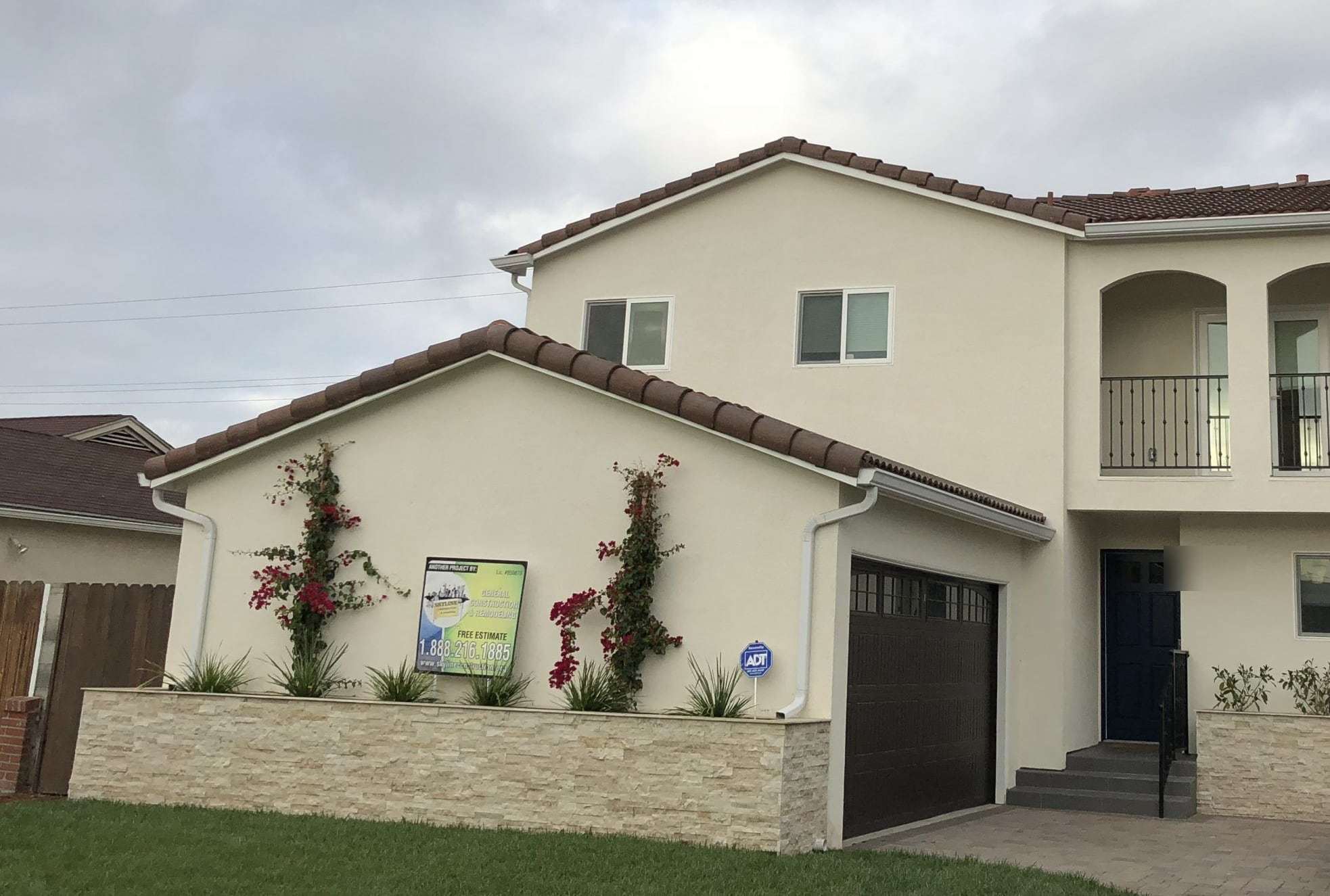
What are the most common types of homes in Los Angeles?
Los Angeles City Planning groups the city's houses by when they were built. The oldest are the Victorian and Turn of the Century houses, Craftsman bungalows among them, many of which went up in the city's "first streetcar suburbs". Between the wars came a large wave of Period Revival houses, alongside early modern ones in the Art Deco, Streamline Moderne, Modern and Minimal Traditional styles.
After 1945 most new houses went into subdivision tracts, and that is the stock most Valley owners live in today. If you know roughly when your house was built, you can usually narrow its style to two or three candidates from the lists below.
Los Angeles is home to the largest collection of Period Styles in the country largely due to the building boom of this period.
Popular styles included Colonial Revival, Dutch Colonial Revival, Spanish Colonial Revival, French Eclectic, English and Tudor Revival, Mediterranean Revival, Neoclassical Revival, and Monterey.
Popular post war styles included Minimal Traditional, Ranch, Post and Beam, and Contemporary commonly found in subdivision tracts in Westchester, West Los Angeles, and the San Fernando Valley.
What makes a house a California Ranch?
SurveyLA, the City's historic resources survey, treats the Ranch both as a kind of house and as a look. The kind is a single-story home that spreads out across its lot, with an open plan and rooms that open onto the yard. The look is the low roof, the siding and the big picture windows. Ranch neighborhoods grew where open land remained after the war, including Baldwin Hills, Westchester, parts of West Los Angeles and the San Fernando Valley.
SurveyLA also notes that most postwar Ranch houses were designed and built by local contractors, with no architect involved. For a remodel that matters: the framing follows the building practice of its day, and what sits inside a wall is only certain once the wall is open.
As a property type, the Ranch house refers to a one-story, single-family residence with a rambling footprint, horizontal massing, an open and free-flowing interior plan, and an integral relationship with the outdoors.
low-pitched roofs, a variety of façade treatments that typically includes wood board-and-batten siding, picture windows, and the application of historicist or modern ornament and details.
customized Ranch house neighborhoods can be found in the San Fernando Valley, particularly in the Northridge area and in several of the communities located to the south of Ventura Boulevard.
Does the style of my house matter when I remodel?
Outside a historic district, the style of the house is advice to weigh as you design. City Planning's booklet for owners of older homes is written that way: it recommends how to treat original stucco and windows, and leaves the choice to the owner. Inside a historic district the same kind of guidance can become part of what the City reviews.
The practical points are about materials. A Spanish Colonial or Mission Revival house was finished in hand-troweled stucco, so a sprayed patch next to it will show. Original windows can often be repaired, and where they are replaced, the booklet asks for a close match.
In California, where Spanish Colonial Revival and Mission Revival architecture became popular, stucco was one of the most commonly used building materials. Original stucco was never sprayed on, but applied by hand.
Match replacement windows to the original in size, design, and material.
It usually costs less to repair windows than to replace them.
How do I find out if my house is in a historic district?
In the City of Los Angeles, look the address up in ZIMAS, City Planning's online zoning map. It shows whether the lot sits inside a Historic Preservation Overlay Zone, or HPOZ, and whether the house is rated Contributing or Non-Contributing to that district. Three of the adopted districts are in the San Fernando Valley: Balboa Highlands, Stonehurst and Van Nuys.
If your house is in another city, ZIMAS will not cover it. Ask that city's planning department whether the address is on its historic list before any design work starts.
To determine if a particular structure, landscape feature, natural feature, or site is Contributing, consult Los Angeles City Planning’s web-based mapping tool, Zoning Information and Map Access System (ZIMAS).
What needs approval in an HPOZ?
Anything that changes the outside of the house or the lot. The review reaches past building permits to work that would never need one elsewhere, such as repainting, concrete work and most landscaping. City Planning says small changes can be signed off quickly, while larger ones may take up to 75 days.
Order matters. The HPOZ unit's advice is to talk to the district's planner before applying for building permits, so that the drawings sent to plan check already reflect what the district will accept.
All exterior work proposed in an HPOZ, including landscaping, alterations, additions, and new construction, is subject to additional review.
HPOZs require approval for many types of projects that do not require building permits; such as painting, concrete alterations, most landscaping
A good rule of thumb is to remember all exterior alterations require HPOZ approval.
What happens if work in a district skips review?
The City can treat it as a code case. Unpermitted work goes before the district's HPOZ board, and where it does not fit the district's Preservation Plan, the owner can be told to put the house back the way it was.
Size is the other trap. In its standards for Ranch house districts, SurveyLA counts houses that have gained a second story or a large one-story addition as non-contributing. On a Contributing house in a district, how big an addition can be is a design question to settle before any permit application.
Work done within a Local Historic District without HPOZ review may be subject to Department of Building and Safety Code Enforcement action and related fines
If the unpermitted construction does not comply with the Preservation Plan, the homeowner will be asked to restore the property to its original condition.
Residences with second-story or large one-story additions are non-contributing
Are there tax breaks or code allowances for historic houses?
Two are worth asking about. Owners of a Contributing house in an HPOZ can apply for a Mills Act contract with the City, which City Planning describes as a way "to aid in rehabilitation" through lower property tax.
On the construction side, the California Historical Building Code gives a qualified historic house some room to use other materials or methods than the standard code requires. Whether your house qualifies is a question for the building department, and it should be settled before the plans are drawn.
are eligible to enter into a contract with the City that can result in substantial property tax savings.
The California Historical Building Code (CHBC) allows owners of a qualified historic property to use alternate construction materials or standards than would be required under the California Building Code.
From our own jobs
What a mid-century house told us once it was open
A client who reviewed us on Yelp in 2015 had us remodel a kitchen, a main bathroom and a second bathroom in a mid-century modern house. The client described several structural complications that came from the way the original house was built. The kitchen took in a separate laundry room, and in the main bath a closet wall came down to enlarge the shower.
The chosen design then had to change. With the beams exposed, some walls could not come out at all, so the design was readjusted and plans were drawn for two headers and a support beam, which went through permit approval. The style of a house tells you what to expect. The framing decides what is possible.